Academic curriculum
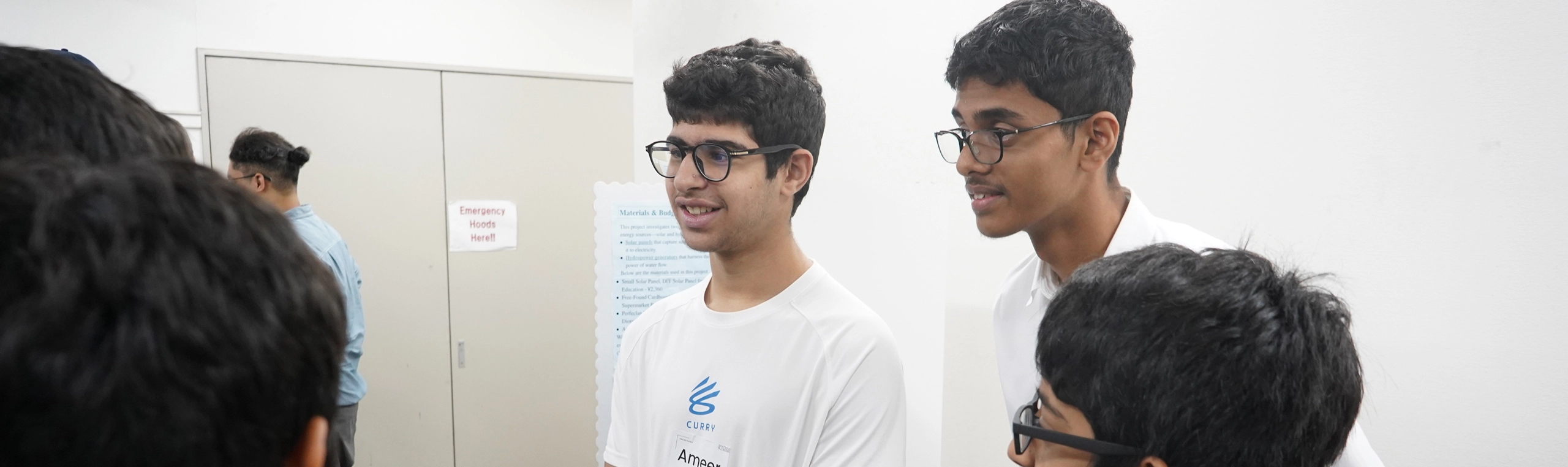
Focuses on developing students’ social skills, motor skills and learning the fundamentals of academics. Group of young students engaged in discussion at a science exhibition, wearing white shirts and glasses.

IGCSE Overview

Cambridge International IGCSE is a globally recognized qualification for students aged 14 to 16. It offers a flexible curriculum with a broad range of subjects, focusing on critical thinking and problem-solving. The IGCSE prepares students for further education, such as AS & A Levels, and is respected worldwide, supporting progression to higher education and careers.

Subjects Offered

DSC09595 English Language
English Language This course teaches clear and effective communication in speech and writing, focusing on vocabulary, grammar, and personal style.

Cambridge Course ID: 500

Division: Upper Secondary

Subject Areas: English, Language Arts

Grade Level: 9 to 10

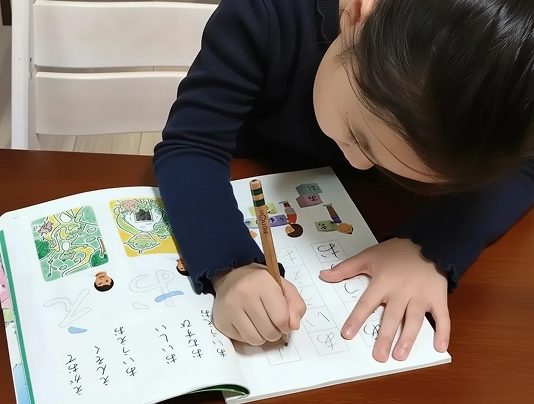
Child practicing Japanese writing with a pencil in a workbook at a desk. Japanese Language / Kokugo
Japanese Language / Kokugo The UIA Japanese curriculum helps students learn to speak, read, and write Japanese, while the Kokugo curriculum provides native-level instruction for various needs.

Cambridge Course ID: N/A

Division: Upper Secondary

Subject Areas: Languages

Grade Level: 9 to 10

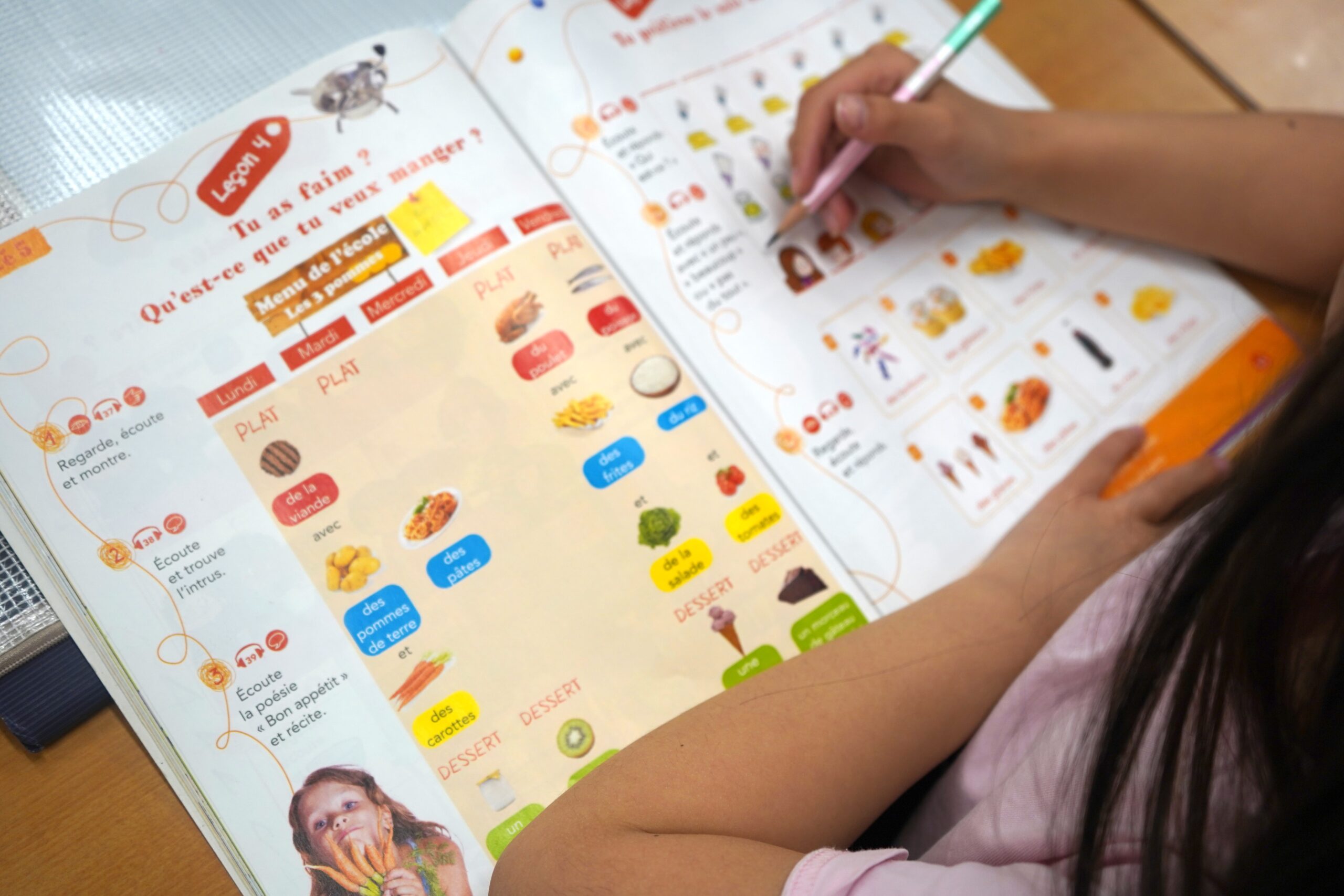
DSC09554 French
French This syllabus aids students in learning French, emphasizing effective communication through listening, reading, speaking, and writing skills as they progress.

Cambridge Course ID: 520

Division: Upper Secondary

Subject Areas: Languages

Grade Level: 9 to 10
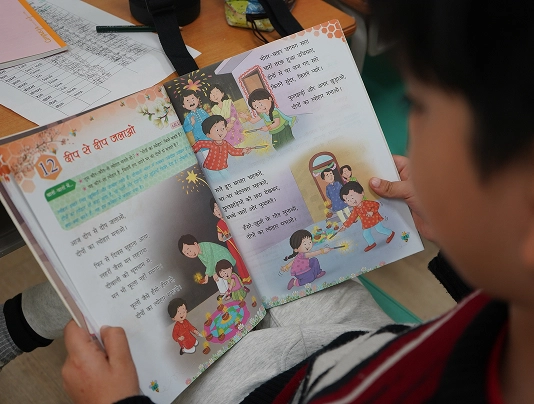
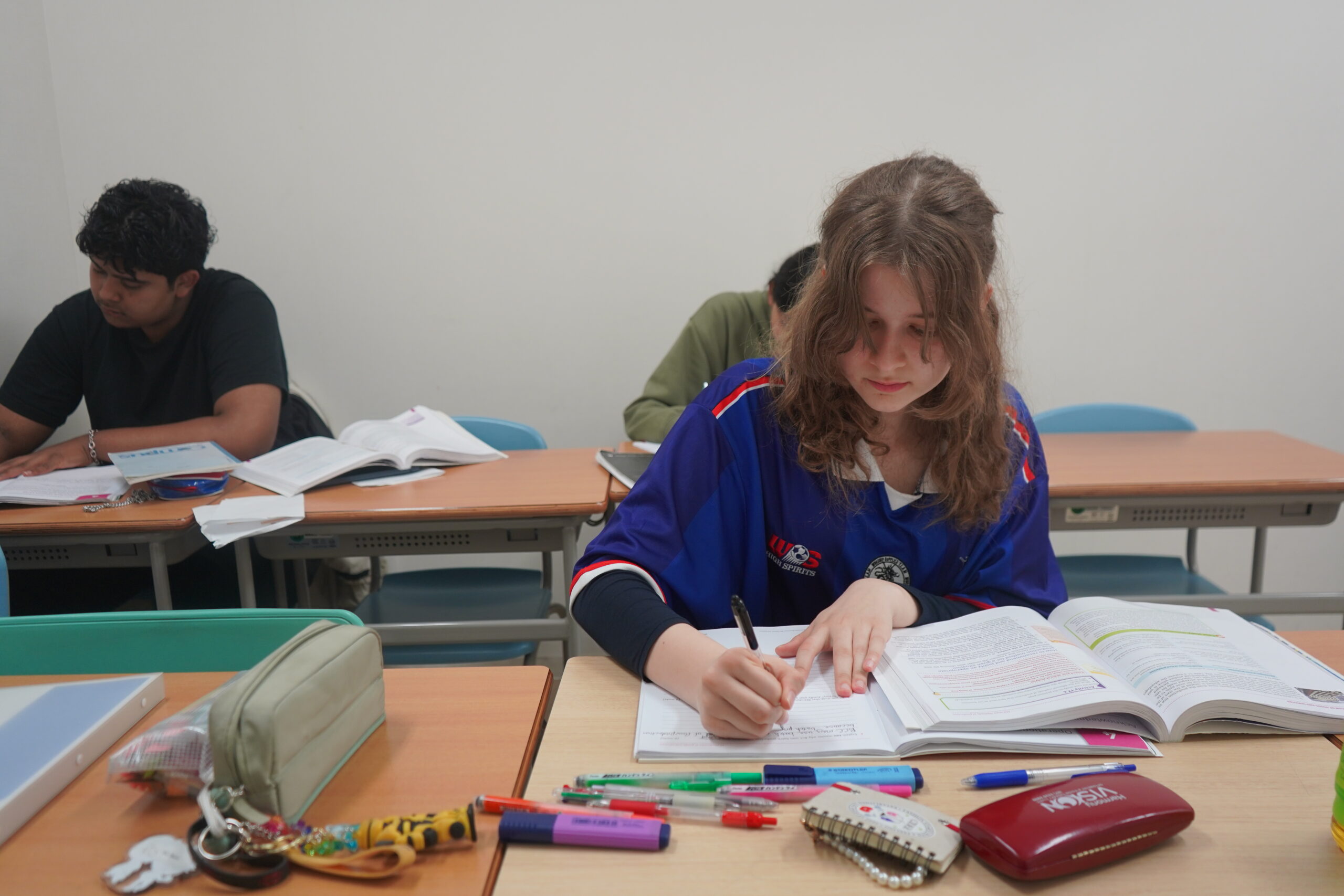
Child reading a colorful Hindi storybook in a classroom setting. Hindi
Hindi The syllabus focuses on reading, writing, listening, and speaking, helping learners build practical communication skills and prepare for advanced Hindi studies.

Cambridge Course ID: 549

Division: Upper Secondary

Subject Areas: Languages

Grade Level: 9 to 10
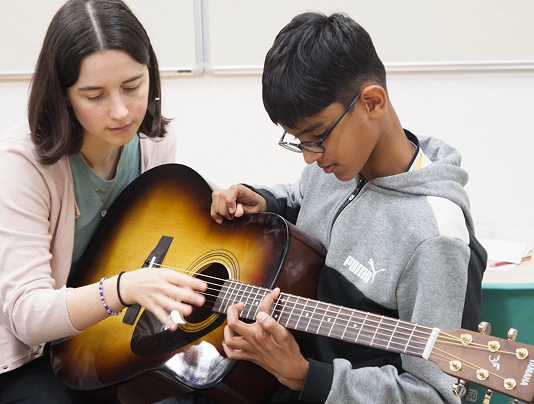
Guitar lesson with a tutor guiding a young student on acoustic guitar playing in a classroom setting. Music
Music Music boosts creativity and confidence, allowing learners to express themselves and understand the value of communication with musicians and audiences.

Cambridge Course ID: N/A

Division: Upper Secondary

Subject Areas: Fine Arts

Grade Level: 9 to 10

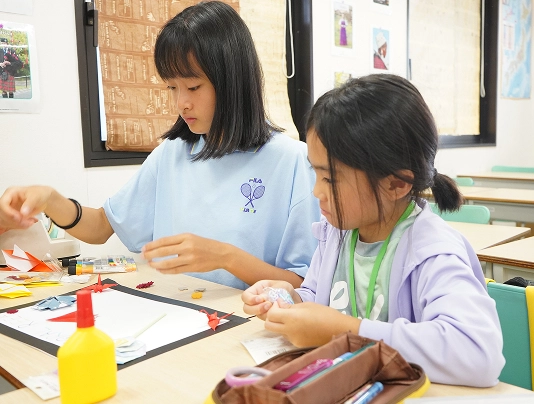
Children engaged in crafts at a classroom table, creating colorful art with paper, glue, and stationery. Art & Design
Art & Design Art & Design allows learners to express themselves, fostering creativity and transferable skills. Students become critical thinkers and articulate personal responses.

Cambridge Course ID: N/A

Division: Upper Secondary

Subject Areas: Fine Arts

Grade Level: 9 to 10

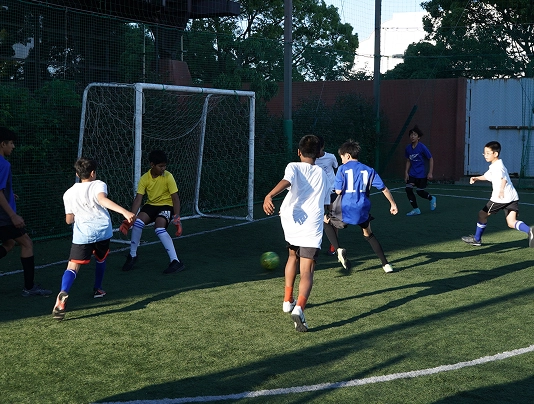
Children playing a competitive soccer match on a green field near the goal under a sunny sky. Physical Education
Physical Education Physical education is essential for a balanced curriculum. Regular exercise boosts health and academic performance, laying the groundwork for a healthy lifestyle.

Cambridge Course ID: N/A

Division: Upper Secondary

Subject Areas: Physical Education, Health & Fitness, Well-being

Grade Level: 9 to 10

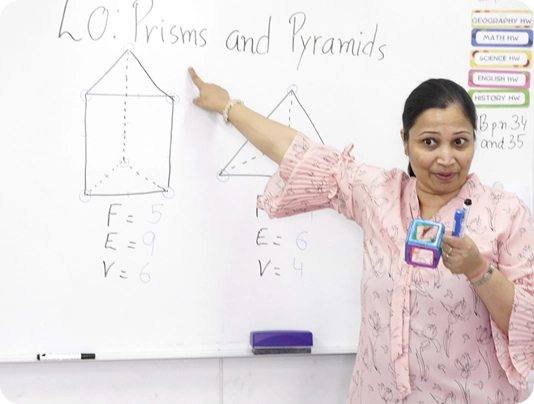
Teacher explaining prisms and pyramids with diagrams on a whiteboard in a classroom setting. Mathematics
Mathematics Cambridge IGCSE International Mathematics helps learners build their math skills as essential life skills and a foundation for further studies or other subjects.

Cambridge Course ID: 607

Division: Lower Secondary

Subject Areas: Computing & Technology

Grade Level: 6 to 8

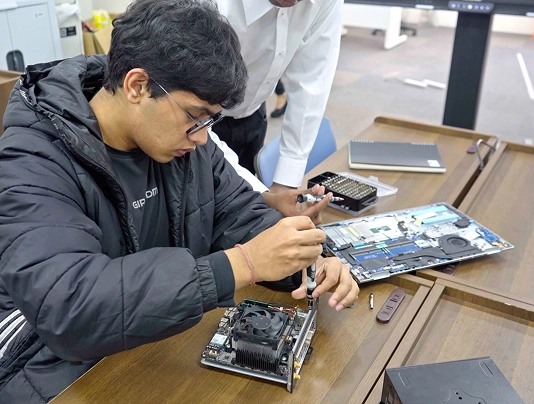
Technician assembling computer hardware components on a desk for repair or setup. Computer Science
Computer Science Students study how technology impacts society and use ICT tools like word processors and presentation software to solve problems.

Cambridge Course ID: 417

Division: Upper Secondary

Subject Areas: Professional & Creative

Grade Level: 9 to 10

gar Environmental Management
Environmental Management Learners explore Earth’s systems, resources, and human impact, focusing on sustainable management.

Cambridge Course ID: 680

Division: Upper Secondary

Subject Areas: Sciences/Humanities and Social Sciences

Grade Level: 9 to 10
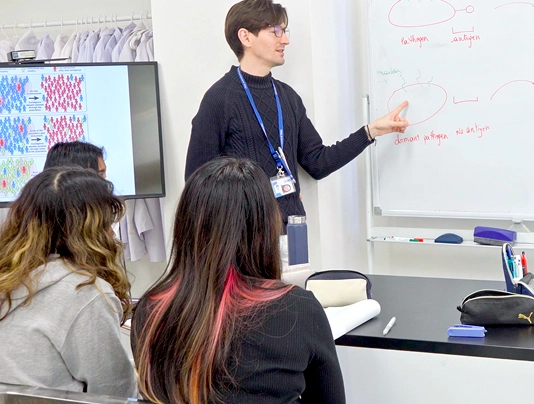
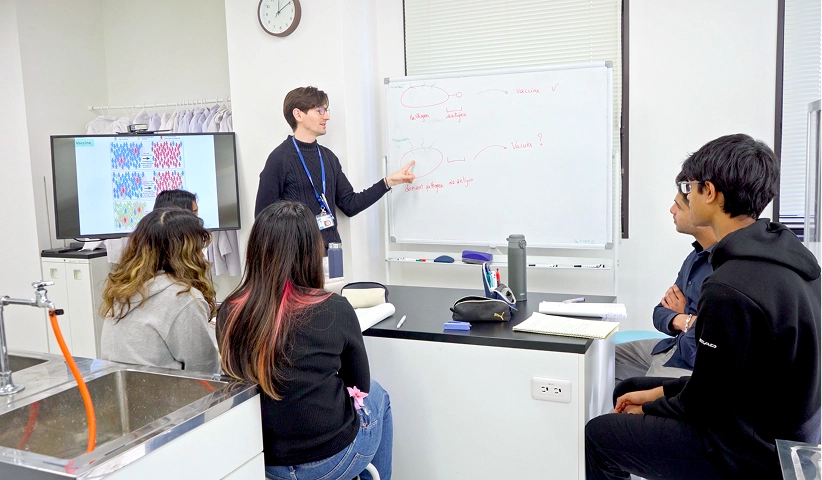
Teacher explaining scientific concepts to engaged students in a classroom with a whiteboard and presentation screen. Biology
Biology Cambridge IGCSE Biology helps learners understand the living world, develop interest in science, and learn key biological concepts, applications, and practical skills.

Cambridge Course ID:  610

Division: Upper Secondary

Subject Areas:  Sciences

Grade Level: 9 to 10
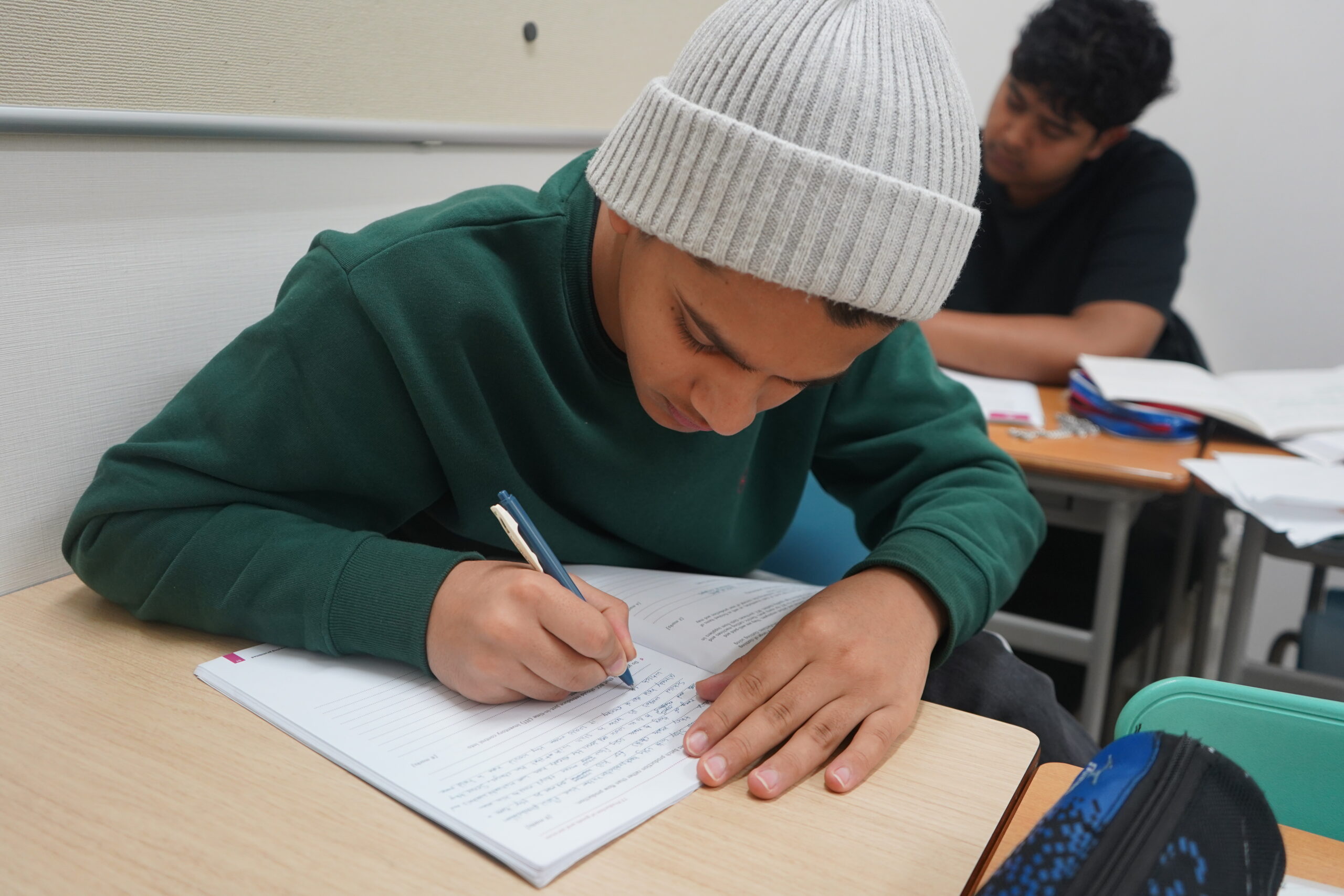
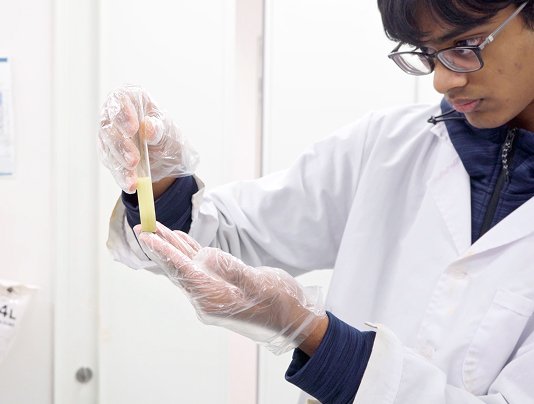
Scientist in a lab coat examines a test tube, wearing gloves for safety in a laboratory setting. Chemistry
Chemistry Cambridge IGCSE Chemistry equips learners with essential principles and practical skills, fostering an informed interest in science and its applications.

Cambridge Course ID: 620

Division: Upper Secondary

Subject Areas: Sciences

Grade Level: 9 to 10
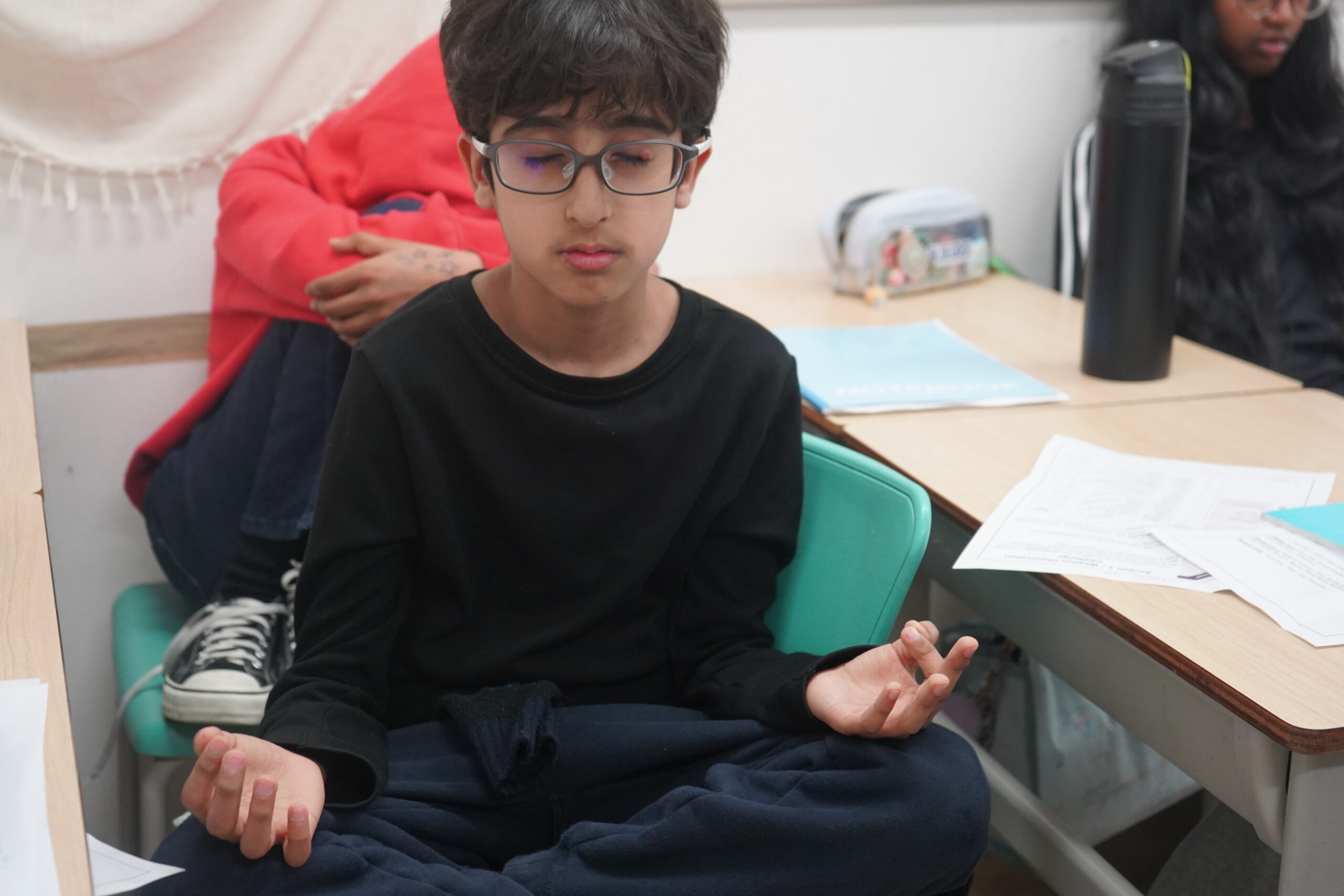
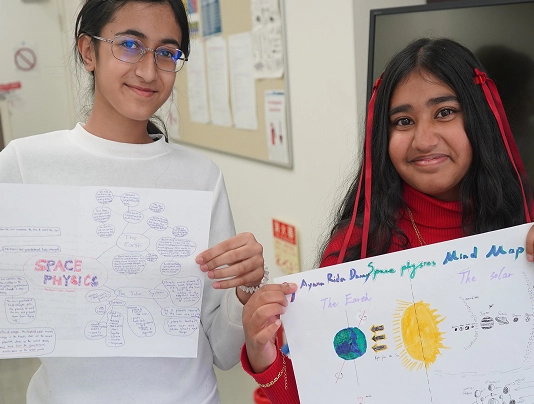
Two students proudly display their space-themed mind maps in a classroom setting. Physics
Physics Cambridge IGCSE Physics helps learners understand the technological world, engage with scientific advances, and develop core principles, applications, and practical skills.

Cambridge Course ID: 625

Division: Upper Secondary

Subject Areas: Sciences

Grade Level: 9 to 10
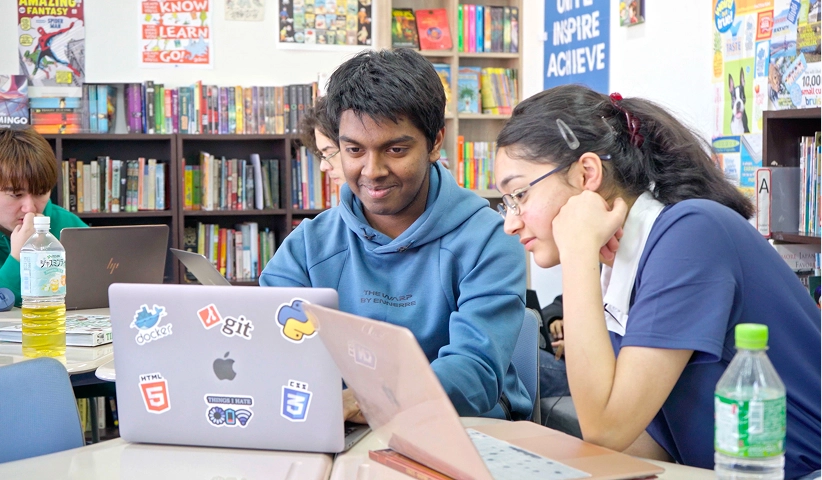
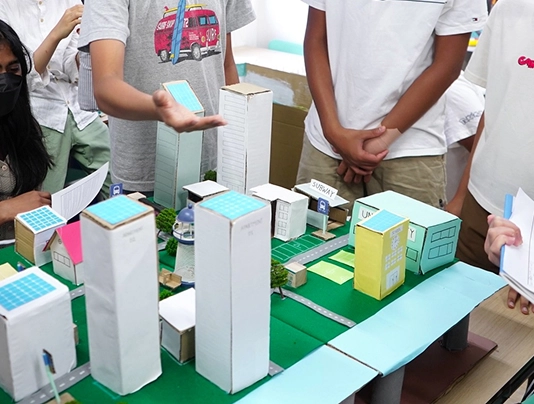
Students presenting a model of a sustainable city with solar-powered buildings and green spaces. Economics
Economics The Cambridge IGCSE Economics syllabus builds understanding of economic theory, global economies, and connections, teaching students to analyze data and apply it to real issues.

Cambridge Course ID: 455

Division: Upper Secondary

Subject Areas: Humanities and Social Sciences

Grade Level: 9 to 10
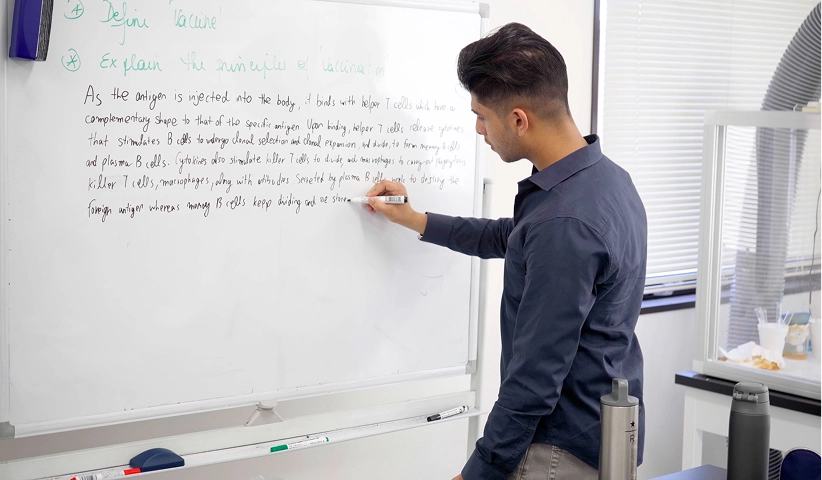
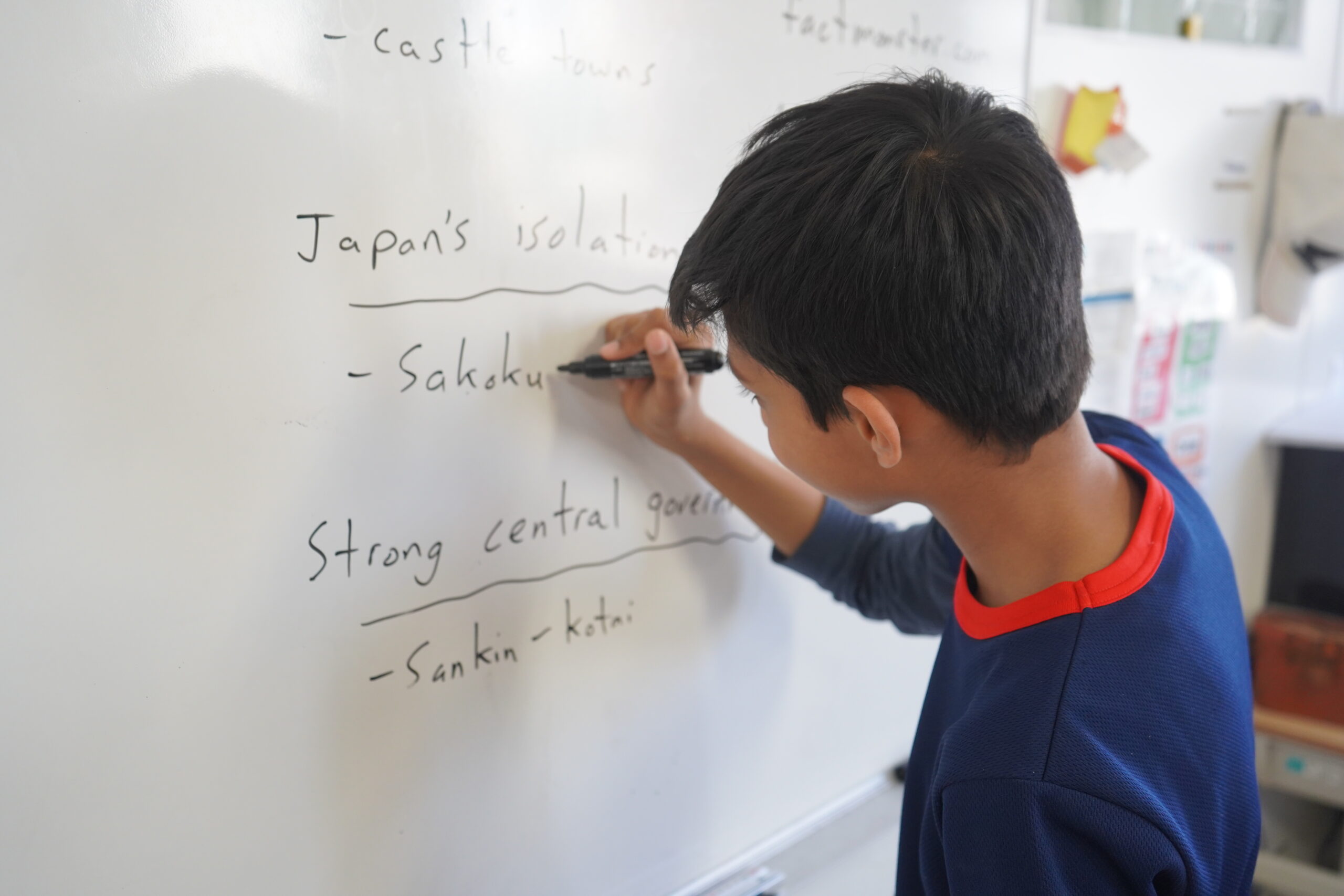
DSC09552 History
History It builds historical knowledge and skills, offers flexible learning, supports further study, and inspires lifelong interest in history.

Cambridge Course ID: 470

Division: Upper Secondary

Subject Areas: Humanities and Social Sciences

Grade Level: 10

DSC09586 Business Studies
Business Studies Learners study how businesses are formed, financed, run, and regulated, and explore decision-making factors and the values of cooperation and interdependence.

Cambridge Course ID: 450

Division: Upper Secondary

Subject Areas: Humanities and Social Sciences

Grade Level: 9

DSC09633 Wellbeing
Wellbeing Cambridge Primary Wellbeing promotes a holistic approach, encouraging learners to actively engage in their own wellbeing and build positive relationships.

Cambridge Course ID: N/A

Division: Upper Secondary

Subject Areas: Special Subject Area, Health & Fitness, Well-being

Grade Level: 9 to 10
Learning Areas

Core Academic Learning


  • Develop deep subject knowledge and conceptual understanding

  • Strengthen analytical thinking, reasoning, and problem-solving skills

  • Apply learning to theoretical, practical, and real-world contexts

  • Critical reading, writing, speaking, and listening

  • Logical and mathematical reasoning

  • Develop digital literacy and computational thinking

  • Apply problem-solving skills using technology

  • Build intercultural awareness and global competence

  • Practical ICT and digital skills

  • Real-world application of technology

  • Understand historical, social, economic, and environmental systems

  • Analyse causes, effects, and relationships in human societies

  • Encourage creativity, expression, and technical proficiency

  • Inquiry, research, and evaluation

  • Promote physical fitness, coordination, and healthy lifestyles

  • Build confidence, resilience, and personal responsibility

  • Social skills and collaboration

  • Personal growth and self-discipline

Weekly Schedule

(IGCSE)

Grades 9 -10

What is the difference between IGCSE Core and IGCSE Extended?

To take into account differing abilities, there is a choice between Core and Extended curriculum papers in some subjects. The Core curriculum is within the ability range of a large majority of students. It provides a full overview of the subject and is targeted at students expected to achieve grades C to G. The Extended curriculum has been designed for the more academically able. It is targeted at those expected to achieve grades A* to E.
Learn More